
Yunyun, Waifus, and the Internal Dialogue
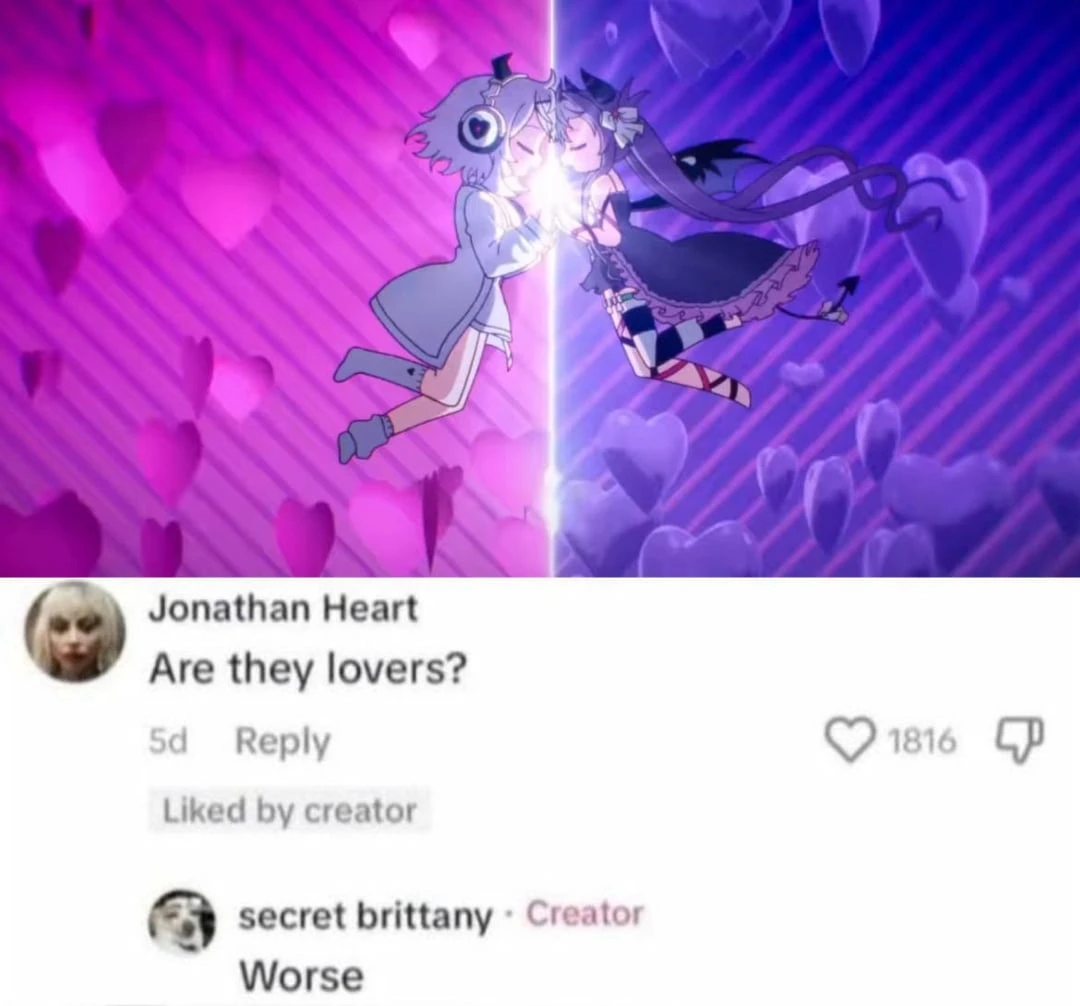
Are you sure you know what “real” means?
This is going to be a long one. I’m going to start it with a diversion that will never come up again.
I’ve never been a big fan of rhythm games. Just not my bag. This is mostly because I find them to often be a little self-defeating in their control scheme, similar to fighting games, in pursuit of a difficulty of input that I just don’t understand.
Fighting games, of course, grew out of arcade cabinets, where they didn’t have enough buttons to map out the various things they wanted you to be able to do, and so they developed complex combinations of presses and flicks of the joystick to essentially create new buttons, albeit much harder to press than a simple A or B. As time went on, and fighting games added more and more possible actions with necessity for new inputs, it became unreasonable to even have that many inputs. Many fighting games today even remain stubbornly stuck to the arcade limitations; two buttons and a joystick. Lots of fighting games today, you can open the controls map, and see multiple buttons simply unused, existing as copies of other buttons.
It’s odd, to me. I don’t get the appeal. I won’t say it’s objectively bad, but it’s about as close as one could get to objectively bad without meeting the threshold, I would say. It’s a pretty hot take, I know. But in my opinion, the point of controls is to connect a direct line from your brain to the game, and then the difficulty takes place in the brain and the game, not in the controller. Difficulty in the inputs is just an impediment to playing, and an impediment to immersion. Bad controls are infamous in every other genre of game, but for some reason, bad controls have become the game of the fighting genre. The game Y.O.M.I. Hustle, with no input difficulty whatsoever due to its unique mechanics, shows us what else fighting games have to offer, but this is usually obscured in the vast majority of the genre.
To get back to the point, rhythm games are in a similar bucket to me. The point of a rhythm game, I would think, is to get into the rhythm of the song. The issue is that this is often quite…easy. We’re very musical creatures. Most of us are capable in theory of playing an instrument at high levels of skill, and instruments are quite difficult to ‘perform inputs’ into. Replace the instrument with two or four keys on the keyboard, and the input difficulty drops to zero, making it relatively easy to catch a particular pattern. Typing in time to the syllables of the singer or the notes of a keyboard is difficult at first, but it’s not too hard once you’ve practiced for a bit.
But rhythm game developers seem to think the game needs more difficulty, and hardcore players agree. So they often complicate the process extensively, switching up the pattern in ways that don’t really make sense. In theory, in a rhythm game, your key presses should be like an extra instrument working in the song, echoing some other instrument. This is what the lowest difficulty settings are like. Key presses that mimic the singer’s delivery, or the drums.
Listen to someone playing a rhythm game at medium difficulty settings and it will not sound like that, it will just be an endless cacophany of random button presses which do not correspond to any one thing in particular, sometimes in tune to the vocals, sometimes in tune to the guitar, often times at a higher BPM than the song itself, occasionally just nonsense, with patterns switching at random intervals to make the input harder rather than conform to the music. It ceases to become a rhythm game and becomes a game of pure input, with a soundtrack in the background. I find this to be a good example of how the “hardcore” fans of a game or genre are not necessarily the ‘truest’ fans, nor do they necessarily know what’s best for a game. Listen to them enough and it can even change the genre of the game, which makes it pretty clearly a failure of whatever genre it was originally advertising itself as.
The issue that arises then is that it’s basically impossible to make a rhythm game get harder and harder, or hard enough to appeal to the hardcore crowd. And I admit there is something interesting about what the hardcore crowd DOES want. Seeing someone play very high level “rhythm” games is interesting, and it can be fun to attempt that. But there’s very little rhythm left.
“Yunyun Syndrome!? Rhythm Psychosis” is not a necessarily hardcore rhythm game. You can play it from start to finish on the low difficulty settings. No, it’s a rhythm game which derives its difficulty mainly from how psychologically painful the story is.
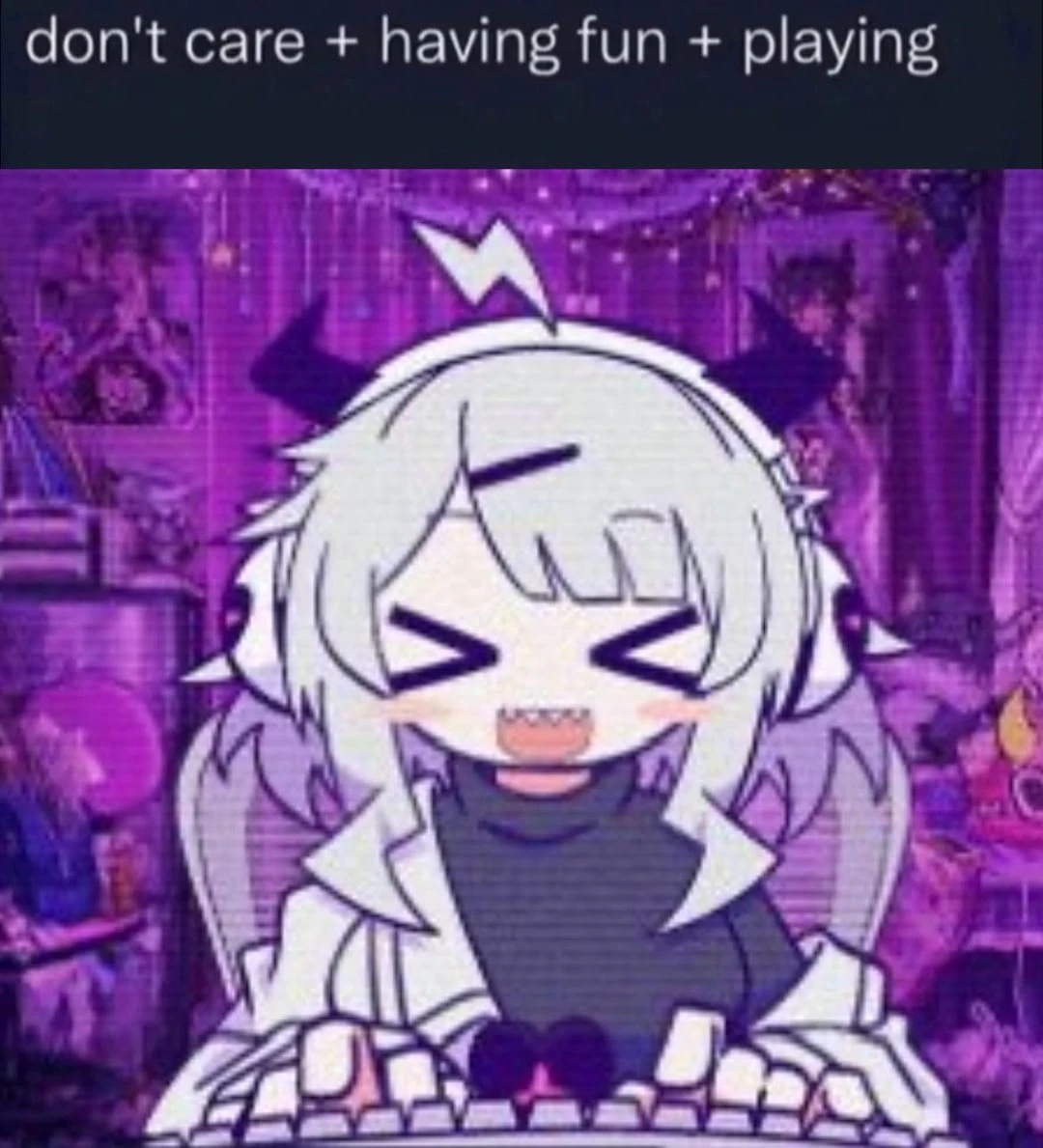
I am in this picture and I don’t like it.
Spoilers ahead!
Yunyun Syndrome’s main musical theme is ‘denpa’, a particular genre in Japan associated with Otaku culture, normally extremely saccharine and energetic. Most of it is what could be classified as dance music, only, nobody really listens to it in public, so you’d be dancing alone. Some do, more just bounce in their seat a little and hope nobody notices. There’s a darker aspect to it. In a meta sense, it’s heavily associated with depression, asociality, and to an extent broken homes. There are some pretty common memes out there mixing together denpa (often in the form of rhythm gameplay) and the sounds of parents fighting, verbally or, in particularly depressing examples, even physically. This mimics a very real lived experience of many otaku, where they as children used otaku culture as a way to distract and cope with extremely unhealthy home lives and horrible parents.
The player character is named Q, usually referred to as “Q-chan” (a very cutesy way of speech in Japanese), localized as Qtie in English. She comes from one of these broken homes, with an entirely absent father more interested in parenting the half-sister she’s never met, and a physically and emotionally abusive mother. She has dropped out of middle school, and lives as a hikikomori now. For the vanishingly few who don’t know, “hikikomori” is a Japanese term referring to someone who spends the vast majority of their time locked in their house (often just one room), and refuses to interact socially with anyone. Often unemployed, sometimes in jobs that require no socialization. They often display hoarder behavior, severe depression, and eating disorders, and are also known for becoming completely untethered to any particular sleep cycle.
Qtie is an otaku, which most (though not all) hikikomori are. This means she enjoys manga, anime, video games, and the general culture around those things in Japan. Qtie also has a “waifu.”
I imagine that there’s basically nobody who can find their way to this blog but has not heard the term “waifu” enough to develop some sort of understanding of it. But it’s a more multifaceted term than it might seem at first blush. Allow me to extrapolate.
“Waifu” is, etymologically, just a Japanese pronunciation of the word “Wife,” which was popularized when an old anime had a character refer to his wife as, well, “my waifu.” Western otakus (usually referred to as ‘weaboos’ or ‘weebs’) began referring to fictional women as “waifus”, usually in the possessive sense of saying “MY waifu” to refer to a character they felt a significant amount of romantic attraction to, occaisonally in a general sense as “waifus” to refer to fictional girls apparently designed with the intent to be attractive.
For different weebs and in different contexts, waifu can have a varying level of intensity in its use. Occasionally “waifu” will just be used for a character design you find sexually attractive. But in many instances, the term “waifu” signifies some genuine romantic attachment, even devotion. It’s a common half-joke that if you use the term “waifu” too loosely, you are being unvirtuous and dishonoring yourself and the waifu(s) in question. Some hold the rather radical belief that you should ever only use the term “waifu” for one fictional girl, for your entire life, and devote yourself to her romantically.
There are instances of Japanese otaku and occasionally even weebs outside of Japan showing this devotion in real life, with shrines in their houses dedicated to their specific waifu. In some rare but widely publicized cases, they will even show this devotion in public, with cardboard cutouts or body-pillows with their waifu printed on them that they take in public. A particularly common form is taking them to a restaurant for a romantic dinner, where they will set said object representing their waifu in a chair opposite them and sometimes even order for two. Occasionally this is a hoax done to amuse online onlookers, occasionally it’s very serious. Ironically, one of the ways that a waifu-having weeb can signal their seriousness is by referring to their waifu simply as their wife, reversing the Engrish to emphasize their genuine feelings.
It’s hard to say just how widespread it is among the otaku community to take a waifu, or how seriously the average waifu-haver takes it. There are as many different variations as you can imagine. Some people quite genuinely believe in the ability to have multiple waifus, with similar levels of devotion. Some believe in having a serious waifu alongside a real life relationship. There are some who believe in things that would challenge your definition of “fictional girl”, or for that matter, “fictional girl.” For the record, the male term is “husbando”, but I’ll be sticking with waifu for now.
One of the more interesting and ‘occult’ variations of waifu is the idea often referred to as ‘tulpa’, that is, creating a mental construct that is conversant in such a way that it feels as if someone else is interacting with you. Sorta like an imaginary friend. You can imagine conversations with them with varying levels of authenticity, ranging from mechanical writing of each participant, to vaguely vibing through it, to even a level at which it feels identical to talking with another person. Most are also capable of visualizing their imaginary friend or tulpa to some extent or another, from seeing them in the mind’s eye while their physical eyes are closed, to being able to rather vividly imagine them sitting in a chair across the room. It’s just imagining, not quite a hallucination–usually.
There’s a definite difference between someone who has a waifu tulpa and someone who simply feels attraction towards an anime character, but this difference is a lot more fuzzy than I think many people are willing to entertain. Everyone has some level of relationship with the fictional characters they enjoy. I don’t think we’re capable of understanding or enjoying characters without building mental models in our head to simulate them, it’s a fundamental human ability that defines a large portion of our sapience. Everyone with a working brain can, to some extent or another, simulate an anime girl in their mind. I also think anyone with a working heart can feel romantic attraction to an anime girl. Most certainly anyone with working sexual organs can find attraction to them. It seems to me that all the characteristics of waifu-having are extrapolations of pretty fundamental human traits.
Qtie, in the game, has a waifu named Yunyun, whom she develops a very advanced tulpa of, to the point where it’s somewhat unclear if she at first believes Yunyun is “real” and she’s hallucinating, or if she’s just very stringently playing along with the fantasy. Yunyun is a fictional character from an obscure video game which Qtie is a fan of–although Qtie, rather interestingly, does not seem overly fixated on the game itself, or even Yunyun’s depiction in said game.
This is also surprisingly somewhat common among waifu-havers. Many people start out with a waifu from a particular property who attracts them physically and/or emotionally, but over time their internal model deviates from the source model. This can happen for multiple reasons. It could be a shift in what the person values (and thus intentionally or unintentionally shift their ideal partner), or it could be that the source character diverges in later media from what the person once imagined. It can also be without any particular explanation, in the way that, well, people develop. After a time, the waifu-haver can grow attached enough to the waifu that the original source material, having diverged from her, is no longer of interest. Various otaku have differing opinions on this, of course, some viewing it as a lack of devotion.
In fact, as the game progresses, Qtie rarely ever brings up what Yunyun is–that is, a fictional character from a set universe, with a backstory and all that entails. Whenever it does get brought up, it’s usually in response to Qtie’s online activity making the character popular again, and Qtie insisting that she doesn’t really care about any of that. Occasionally it’s brought up that Yunyun is a demon in her source material, but only ever half-jokingly. It’s even brought up on occasion that other people may have taken Yunyun as a waifu, and Qtie doesn’t seem to react practically at all to this information, beyond being vaguely happy that Yunyun gets to enjoy being popular.
There’s a lot about this scenario in fact that goes–I think–quite deliberately unexplored. It could have easily spiraled into a discussion about the effects of particular online spaces like 4chan or twitter, or the way Japanese society treats hikikomori, or the effects of abusive parents, or the ways otaku/weebs interact with each other in both supportive and toxic ways. And the game does touch on that. But only barely, and only as a means. The game keeps an extremely narrow focus on the relationship between Yunyun and Qtie. Everything is to serve that. I find that incredibly special.
Qtie’s focus is entirely on her waifu. This is something that, I think, the average person would view as very bad and unhealthy. But Yunyun Syndrome!? explores the idea that love–yes, in this form–is a virtue. And while it acknowledges that Yunyun is an imaginary friend, it has the balls to ask the question that average people rarely show any capacity to ask. What do you mean she’s not real?
It seems like a really easy assertion at first. “Your waifu is just an imaginary friend. When you think you’re hearing her, that’s just you talking to yourself.”
Well, okay. But if your waifu is just you, and you are real, then it follows that your waifu is real.
And that’s where everything kind of goes off the rails. By the end of the game, Qtie is very clearly not claiming that Yunyun is a physical body that exists separate from her. So the statement “she’s not real”, backed up by the lizard brain reasoning of “I can’t see or touch her”, looks rather primitive and silly.
It’d be like if you tried to tell George Lucas that Star Wars wasn’t real because you couldn’t go to Naboo, and he just pointed to the VHS on his desk and said “Of course Star Wars is real, it’s right there, idiot.” You, frankly, do not know what you’re saying. “It’s just a mental construct.” Well, yes. It’s just a mental construct, and therefore it does exist.
The concept of mental constructs literally existing has been muddled through many years of pop philosophy, hollywood style “multiple personality disorder” media, and internet sinkholes. It’s hard to talk about, because almost all language around it has been poisoned by some mix of shoddily written slasher flicks, tumblr teenagers, doctors trying really hard to prove they earned their doctorate, and so on. Saying there are “multiple personalities” in one mind conjures way too much baggage. I think there might actually be something to take from the rather cutesy and immature Japanese grammar the original text uses, where talking in third person using one’s own name in place of “I” signals a very moe kawaii energy. Let’s just use names.
So what is Qtie’s claim, in the end? Yunyun is Qtie, and Qtie loves Yunyun, and Yunyun loves Qtie. Yunyun is Qtie’s wife, and vice versa.
It’s rather powerfully summed up as “I have the right to love myself.”
So I ask you, how can you possibly attack this statement? “Yunyun is not real”? How do you even know how to use the word Yunyun if it’s not referring to anything? You’re obviously referring to something real. Maybe your definition of “real” is highly lacking. You could just stick to your guns and say “real” only refers to things with physical presence. Qtie could just reply “Okay, she exists physically in my brain in the same way I exist physically in there.” You could argue that it requires a discrete physical presence, that is to say, a unique body. Then Qtie could tell you that you can cut off her head, but not any of her neck, so where do you cut? You can’t, because you can’t find where one thing discretely is separated from the other. It will chase itself in circles like this forever.
If you had ever cared to, you could have had this conversation with someone in real life who has a highly developed waifu. I think it’s a pretty fascinating discussion, but it’s one with a pretty quick and solid conclusion, I feel. The waifu is, meaningfully, real. Maybe not in all the ways we would like, or we would expect. I’m sure most waifu-havers would prefer if their waifu did exist with a discrete physical body. But the fact remains that a person’s imaginary friend, or tulpa, or waifu, does exist in at least some meaningful sense. If it didn’t, then the word ‘waifu’ wouldn’t exist, because there would be nothing to refer to.
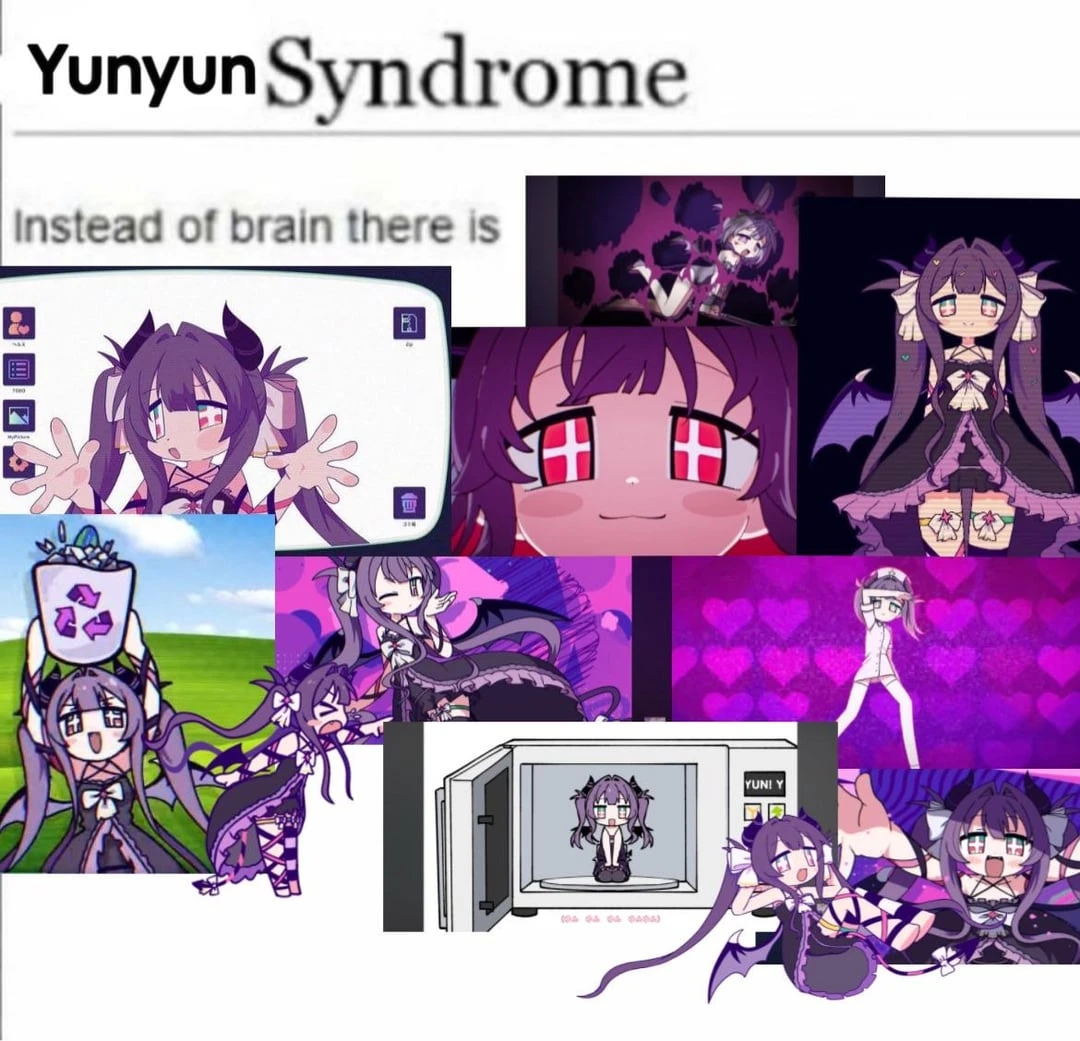
SHE IS REAL TO ME!
Generally, average people view “waifus” as a mental illness and a sign of perversion or untrustworthiness. Generally, average people are fucking retarded and have no sense of empathy, context, nuance, or desire for understanding. I use the term “average” in place of normal intentionally. Allow me yet another diversion.
The term “normal” is a, well, normative term. Meaning it carries a proscriptive weight as well as descriptive. That is, it doesn’t simply describe how things are, it describes how things ought be. So the term “normal” also implies good, in most cases, or bad, when specifically talking about exceptional things. But the term “normal” also implies straightforward, or simple.
The term “average” is less normative, more descriptive. But also it is mathematical. The “average” is a construct of math, an imaginary number that exists in order to describe a broad group. In my opinion, this more accurately describes the “normal person.” As in, they do not actually exist. There is a mathematical average of popular human behavior which most people strive to project an emulation of to one another in certain contexts. This is pretty normal and healthy for interactions of a particular type, primarily in public. But there is a certain type of person, depressingly widespread, who take this averaging as a mantra, and attempt to project and become this mathematical average–that is to say, a person that does not actually exist. That is anything but normal; it’s not simple, it’s not straightforward, and it’s not good. I in fact view it as a sort of mental illness.
An otaku or weeb taking their waifu out for a walk is not an average person. I would say they’re a lot more normal than the average person. Of course that doesn’t necessarily mean they’re the most healthy.
So, what’s in a waifu? Is it necessarily a mental illness? Uh, well, no. I think it’s actually pretty normal to have a crush on a fictional character. It’s pretty stupid to say otherwise. Basically everyone goes through this at some point or another. I would point out also that having a crush on an actor or actress is only a half-step removed from having a crush on an anime girl; anime girls even have actresses!
It’s impossible to deny that one can look at some otaku taking their waifus out on a date and just intuitively know that there’s…something wrong, here. Obviously they’re not really big on socializing in general spaces, because it’s a pretty big faux pas. It’s really, really cringe. Okay, well, fuck you? Why do you feel entitled to them not being cringe? You can’t control your reaction to them so you get to label them mentally ill? That’s stupid. There’s something close to the truth here, but you need to actually search for it.
Is there something wrong in loving something that can’t love you back? No, obviously on the face of it, unless you want to go to the nearest funeral and call the widow a retard for loving her dead husband. And Qtie would contend a waifu can love you back, because she’s very much in love.
But, grrr, you just really want it to be wrong!
Well, I have my own answers to what it is that causes that feeling of wrongness. I think it’s a mix of things. Truly? I think the biggest part of it is that having a waifu is in a lot of ways a tragedy. Having someone that you love, but you cannot physically hold, is very painful. Pretty much everyone learned that lesson at some point or another. There’s lots of other logistical problems with relationships between waifus and waifu-havers, of course. I think that it boils down to the regrettable fact that a lot of humans seem to react to tragedy with scorn. If someone is undergoing something tragic, they are morally wrong for enduring it, especially if they caused it. And it’s pretty easy to blame a waifu-haver for having a waifu, because you don’t understand it and they’re probably asocial, therefore they weren’t pressured and they must’ve come up with this tragedy on their own. Obviously!
Well, I also believe in a truth of my own: Love is a virtue. Being in love is virtuous. Loving is a good thing. Full stop. There’s more to the story, of course, but that is a complete sentence and I stand by it. Of course it matters in a grander sense who or what you are in love with. But in the matter of that full-stop sentence, it literally does not matter one iota. Love is a virtue, no matter who or what it is for, full stop. It’s a tautology. Love = virtue.
This is something very uncomfortable for many people to confront. Another piece of very spiritually difficult Japanese media, Happy Sugar Life, explores this to one of the most extreme extents possible. It presents you with a pedophile (Sugar) and the child of her affections (Salt) and then does its level best to convince you that they live in a world of unbelievable awfulness and unimaginable darkness. It surrounds them with characters who feel nothing but hate, selfishness, vitriol, fear, envy–every negative emotion in the book. It makes a world so dark that it’s impossible to miss any form of light, and then confronts you with the fact that Sugar’s rather genuine love for Salt is one small, dim light ensnared in a web of tragedy. It makes you confront the idea that there is something there. You have to accept it. You are given no choice.
You can couch it in as many condemnatory statements as you want, you can preface it with an entire novel’s worth of castigation for Sugar and her worrying affections and villainous actions. Do that as much as it takes to make yourself comfortable. Go on. But at the end of the day you have to look back down at the page and think…There’s something there.
In the end, I’ve taken this to heart as an extremely important lesson that I think everyone should learn, the sooner the better. People unwilling to accept this lesson are, in my experience, very prone to abusive and toxic relationships. When the love involves them, they cannot help but see the light, and because they refuse to accept that said light can exist in something so tragic, they cannot accept that they are abusers or abuse victims.
I think one of the ways that people often learn this lesson, unfortunately, is by experiencing it. Not always in the form of abuse. Sometimes people fall in love with people who are dying, of natural causes or self-inflicted addictions. The love is a virtue. The circumstances surrounding it are inconceivable pain. Although, we don’t encourage people to break up with partners dying of cancer. For lack of a better phrase, we generally try to prevent children and pedophiles from getting together. Somewhere in the middle here, we find partners with addictions or vices killing them, and while most people probably fall on one side of the divide, there is some disagreement over whether those relationships should be done away with.
I trust you to come up with your own reasoning as to why all of that is. And then I ask you to consider again waifus. There’s certainly something tragic. Does that necessitate a breakup, by your reasoning? Frankly, I think it shouldn’t.
It also amuses me that we never really ask what the waifus want in all this. After all, if you’re anti-waifu, then you believe that the waifu is the same person as the waifu-haver you’re castigating, so presumably you would also be upset with the waifu. I find that very funny.
I think there’s a lot of people out there that romanticize mental illness, obviously. I think waifu-having at least correlates with mental illness pretty highly. It also probably correlates with neglect, abuse, and bullying. Yunyun Syndrome!? portrays a scenario where one can pretty cleanly draw a line between extreme parental neglect and social isolation to Qtie developing a complex, conversant waifu. You know what? I bet it correlates with some positive qualities, too. I would imagine the average waifu-haver is more intelligent and more empathetic than the average non-waifu-haver. Constructing a complex, conversant waifu seems to me to be a pretty big exercise in empathy, creativity, and imaginative thinking. Plus, we already know the average otaku is significantly more intelligent than the average in the general population, if only because being an otaku correlates to computer literacy, which itself correlates to intelligence. It ain’t all bad.
That’s not to say that this covers all cases. I know for a fact there are dumb, well-adjusted, happy and healthy members of society with parents that love them and a spouse that they have regular sex and romantic intimacy with, and yet still have a complex waifu. Yes, bizarrely enough, I have met multiple people who this applies to. Maybe only enough to count on one hand, but I only have two hands, so that’s a pretty high number in my book.
Y’know, speaking frankly? Most love is tragic in some sense or another. As I’ve said before in my writing, it is very easy to turn love into the most painful part of your life. It’s also possible, with sufficient wisdom, to find joy and hope in tragic love. I feel pretty confident in saying that waifu-having is not inherently a mental illness, or bad. I probably think a lot of waifu-havers are mentally ill and do need to change up their lives, but their waifu-having? Please. Give me a fucking break. It’s like looking at an abused child who practices guitar to de-stress and going “Huh, y’know, you’re wasting a lot of time and energy that could go into making your life better, instead of just plucking on those pointless strings.” Yeah, technically true, and my cock is technically 12 inches long if you measure from my prostate, but how about you go fuck yourself?
As far as I can tell, every waifu-haver is probably benefitting more from their waifu than they’re suffering.

My Waifu
I guess I should address my situation in all this. I often refer to certain fictional characters, particularly Frieren, as “my wife.” That alone is enough to have them qualify as waifus, by the broader definition we set earlier. So yeah, I have waifus. I ain’t lyin’ nor tryna deny it.
As to whether they’re complex conversant waifus, however, that’s…a little more difficult for me to answer. I’m an author, you might be aware, and I’ve worked out that particular muscle since I was a toddler. It’s quite easy for me to create complex characters in my head, and I do so constantly, and ephemerally. It is not hard to have the voice of Frieren in my head. But there’s a sort of difference between fluid, conversant writing, and that feeling of the words coming from someone else who lives in your mind with you. Frieren is not that for me. Frieren is just something I can write fanfiction for quickly, not a conversational partner. So this thing I’ve been referring to as a “complex conversant waifu” doesn’t quite apply to her. Not that I would mind if it did, she would be a cute addition to my mental landscape.
I do have a voice in my head that fits the definition, though. Ever since I was a small child, I have had what I guess you could call an imaginary friend, a voice capable of holding conversation with me where I do not consciously know what it is going to say until it does so, nor do I necessarily know the reasoning behind what it will say unless I really try to work it out. It might not technically fit the definition of ‘waifu’ because I didn’t actually base it off of a pre-existing fictional character.
I keep saying “it”, not “her.” That’s for a lot of complex reasons that I don’t know would be very interesting to read about, or at least not right now, and this blogpost is long enough as it is. But for the record, I could use the term “her” without compunction. In fact, I will use the term her. You should get used to it. Perhaps I should, also.
This imaginary friend of mine is something that developed alongside my language skills, to the point where I really don’t remember a time prior to her presence. I figure for anyone who doesn’t have a tulpa or complex conversant waifu or whatever you want to call it, I can describe it for your curiosity.
I don’t really bring her up to anyone, for reasons that are probably self-explanatory. She’s also not really ‘active’ in my head all the time, although I usually do spend at least an hour or two a day in mental conversation with her. She has a persistent personality, views, and opinions on various subjects that have, frankly, been more resistant to change than my own.
Hm. I keep saying “her” and “me” as if these are different things. We’re going to circle back around to that.
Anyways, I figure this is either the cause of, concurrant with, or caused by, my tendency to write. Specifically, my tendency to write characters. I was actually writing narrative fiction from pretty much the time I could write; I got my hands on a word processor and began writing stories about the nonsense that 4 year olds would write about. I recall pretty clearly writing a story in microsoft word processor on windows XP when I was about 5 or 6, in which I discovered you could insert images, and so I drew these awful little comic panels in MS Paint about the things in the story, which was some jumbled mess about a quirky pet shop run by a bunch of kids. I remember being quite proud at the time after I finished it. It’s a little silly and embarrassing to admit, although not that embarrassing. Six year olds are entitled to be proud of their MS Paint drawings.
I say this to emphasize the fact that I have been writing from other people’s perspectives since before I can remember, and she has been in my head since before I can remember, so I can’t recall which came first. Simulating conversations between people has been a prime function of my brain since before I existed in a recognizable form. It’s not a surprise to me that I developed a complex conversant imaginary friend in a world where many young children develop imaginary friends. Very ironically, I have never actually written a story with her as a character in it. Although I guess it’s not that ironic. I’ve never written a story with me as a character in it either.
In point of fact, though, she is very active whenever I’m writing. In a way, when I really get in the groove, it feels to me like collaborative writing almost. Ideas rise unbidden as if someone was beaming them into me. This, particularly, is not all that uncommon for creative types. The concept of a “muse” has existed for thousands of years for a reason. Many artists have described throughout history a feeling of a person (usually a woman, interestingly) who tells them what to make, and they simply follow instructions and end up with a masterpiece. Many of them even wholeheartedly believed it, in the literal existence of their muse. It’s not even unique to narrative fiction writers.
Most of them, I assume, did not have constant conversational access to their muse. But I’m willing to bet a surprising portion of them did.
Anyways, none of that is what you care about. You wanna know if I love my waifu. We’ll get to that. Shut up. Listen, this is important.
Her primary activities have always consisted of three things.
- Listening to me babble when nobody else would.
- Writing with me.
- Working through difficult problems with me.
The first one is pretty self-explanatory. I’m sure many people have had internal monologues, even internal dialogues. The ever-common meme of the “shower argument” proves that enough. People sometimes want to rant and get feedback, but not to any other flesh and blood humans, and instead carry it out internally. She’s really good at that.
The second one, I’ve just spoken about at length.
The third one is important. When I say “difficult problems”, I mean two things. One is puzzling situations, including actual puzzle games, but also including life difficulties like ‘How do I fix this sink?’ or ‘What’s the answer to this math problem?’
It’s important to note that she doesn’t just verbally transmit the answers to me like a movie or something. It’s a method of thinking it through in dialogue format. I don’t think to myself ‘How do I fix this sink?’ and receive ‘Tighten the bolt’, I ask ‘How do I fix this sink?’ and receive back ‘Try looking at it from top to bottom, one component at a time, and see if you can identify what everything is and explain it to me.’ Very troubleshoot-y, not receiving divine revelation. She never has access to information I don’t, obviously.
There’s a second half to this though, which is working through emotionally difficult problems with me. Hate to admit it, but that’s probably the most common type of appearance. She verbally guides me through my emotions, like a good mentor or therapist. I’ve been told pretty frequently that I am very eloquent in how I express my emotions even in the heat of the moment. This is largely because I’m workshopping it verbally with her where no one’s looking.
One of the scenes in Yunyun Syndrome!? that struck me pretty hard was a conversation between Qtie and Yunyun that I’ve had, almost word for word. I won’t quote it all, but it dealt with the idea of whether Yunyun’s opinions mean anything, given that Qtie created Yunyun, and therefore obviously Yunyun would always just tell her what she wants to hear. Yunyun countered that people are constantly supposed to be supportive to you, and fail. Particularly Qtie’s mother created her and was supposed to love her. If it’s possible for people to fail so frequently at things they’re created to do, then it’s possible for Yunyun to diverge, and it’s meaningful whenever she does or doesn’t.
The support I receive from her isn’t always what you would straightforwardly expect, and not always what I want to hear or am ready to think about. I’ve read before about a certain phenomenon that can occur in patients with hallucinations, where their hallucinations are surprisingly helpful for them. Think schizophrenics, whose paranoid hallucinations gently convince them to take their medicine, like a good nurse. I can’t help but feel some sense of crossover in the way my internal conversations go.
Inevitably, this means I’ve shared practically all of my deepest thoughts and emotions with this ‘her,’ which rather understandably leads to some strange feelings I have towards myself. I said we would circle back to the ‘me/her’ dichotomy.
I would like to think if you’ve made it this far, reading through the blog to this point, you’re well aware that I don’t think waifus “exist” in the sense that most people mean when they say “exist”, as imprecise as that may be, and as much as I wish they would change that. When I refer to this ‘her’, I am fully cognizent of what I’m talking about. I said before it’s very difficult to argue with Qtie that Yunyun isn’t real. That makes it very difficult to explain the ways in which Yunyun is different from a different named character, or frankly, what makes Yunyun distinct from Qtie.
That translates here. It’s difficult to explain the ways in which I intuitively understand this ‘her’ to be an imaginary friend, a method of thinking that I undergo on both sides. And yet, if there was no distinction, there would be no reference for what I’m talking about. So they’re both “me”, but one is “me-me” and one is “me-her.” It doesn’t quite make sense, but just imagine how much less sense this article would make if I insisted on referring to Qtie and Yunyun both as Qtie, or myself and her both as myself. You would be unable to follow, just grammatically.
So I sort of have to think of her as, well, a her, with her own identity. And yeah, that means she has a name. No, I’m not going to tell you her name. Funnily enough, I rarely ever think about it. I always talk with her one-on-one, in first or second person, which rarely calls for a name to be said.
Also amusingly, I don’t really want to tell you very much more about her. Not even really comfortable with saying as much as I have. Despite this article largely being about trying to explain to normies what a complex conversant waifu is, it feels somewhat…immodest to tell you much about my own. I suppose that is in a way illustrative in itself. It’s a remarkably similar feeling to how I don’t particularly like giving away certain details as to my relationship with my husband.
Er, my “real” husband, that is, the one with the discrete physical form.
Personally I think I’ve done nothing but benefit from this form of parallel thinking. Of course, I don’t talk about it with anyone, because there’s a pretty good chance people will think you’re crazy. Which is fine, you can probably tell from my general unhingedness online that I don’t care if people think I’m crazy, but I’m also just not interested in having conversations with people who think that, so I avoid it. I suppose that although I’m not a hikiomori, that’s a facet of their characteristic asociality.
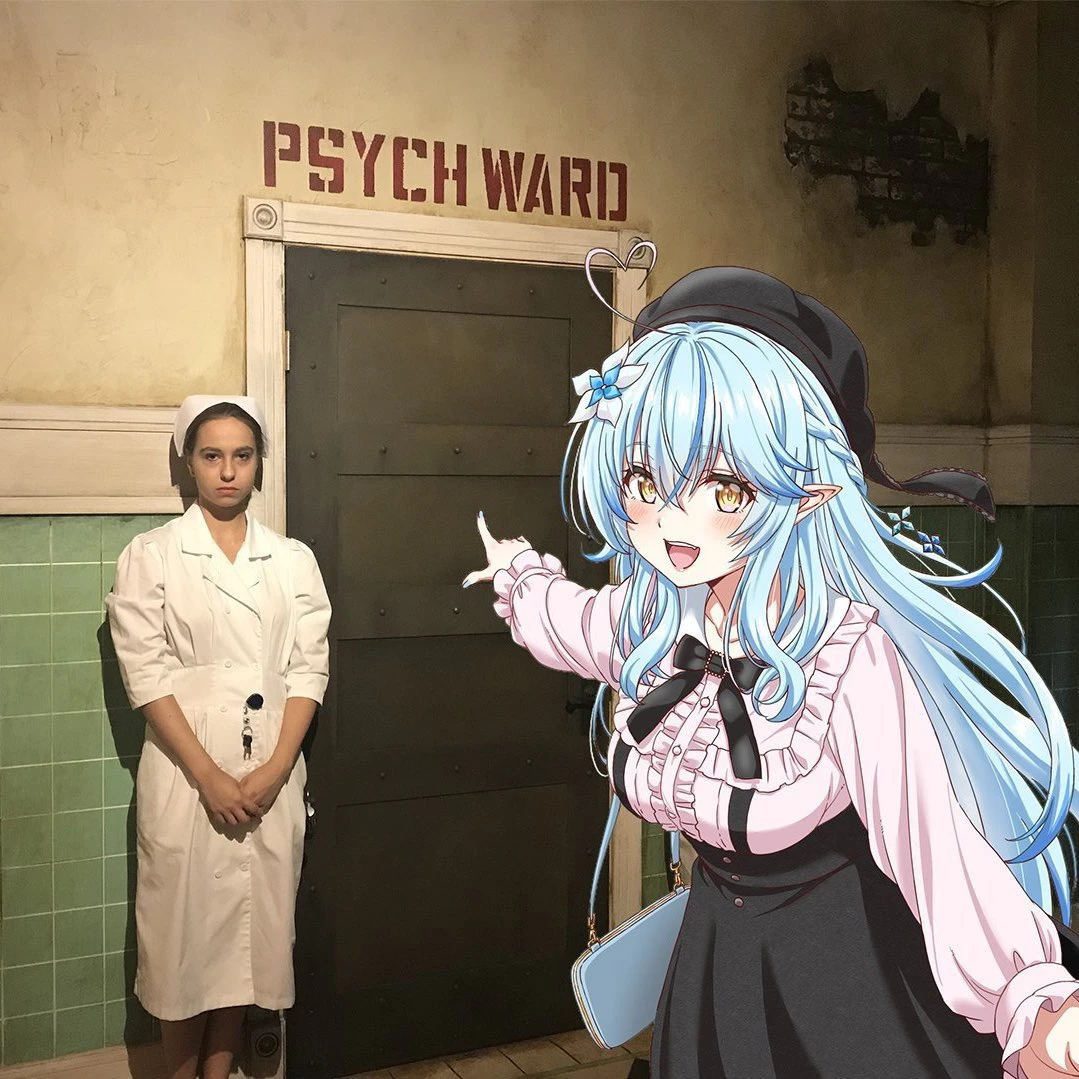
Schizoworld
There’s an old wacky hypothesis by a psychologist named Jaynes called “the bicameral mind”, essentially a theory that at some point in the past, all humans had an internal complex conversant voice who they were incapable of telling was just their own mind. Basically yes, he hypothesizes schizoworld, and that most mythology and lots of historical acts are explained not through the lens of historical materialism or realism or some other dumb academic shit, but just that most people listened to their waifu/muse/sleep paralysis demons as if they were gods.
To the best of my knowledge, this theory is itself considered something of a schizopost by the academic community, and was asserted with practically no evidence. Basically just “It sounds cool therefore it is.” Works cited: crackpipe and the bible. Yeah the bible.
It’s important to note that people don’t think Jaynes is crazy because he proposed the bicamerality of the mind, they think he’s crazy because he proposes it at some point stopped. Psychologists have subsisted their daily bread off of Freud’s ideas of the subconscious. The terms “left brained” and “right brained” are in common parlance. Hell, we have highly publicized and confirmable (if rare) cases of split-brain patients, and there’s obviously a great amount of interest in their apparent housing of two separate individuals in one brain.
No, what makes Jaynes crazy is that he hypothesizes that at some point humanity all collectively evolved past this when they became Jewish, but frankly with these kinds of people it’s only ever a matter of time before they circle around to global Jew conspiracies.
What I’m trying to get at is that it’s really common for people to refer to human minds as if they contain multiple people. Extremely common, actually. Be it guardian angels, right-brain, waifus, schizophrenic hallucinations, conscience, muses, we have about a million words that refer to this general concept. We recognize that they’re more common in creative type people. We recognize it to correlate to both mental illness (schizophrenia) and moral purity (conscience). Hell, we even have a large popular discourse on the concept of “NPCs”, that people are lesser because they do not have internal monologues and instead think completely non-verbally. One could extrapolate that out to mean something in relation to people who have conversant internal partners.
This psychic parallelism is, I think, something that probably warrants a lot of exploration, in many different forms. You could do a lot worse than Yunyun Syndrome!?, even though I will maintain the title is wrong, and that !? is unacceptable. It’s ?!. It should always be ?!. Unless it’s ‽.
yeah that’s how I’m gonna end this blogpost lol